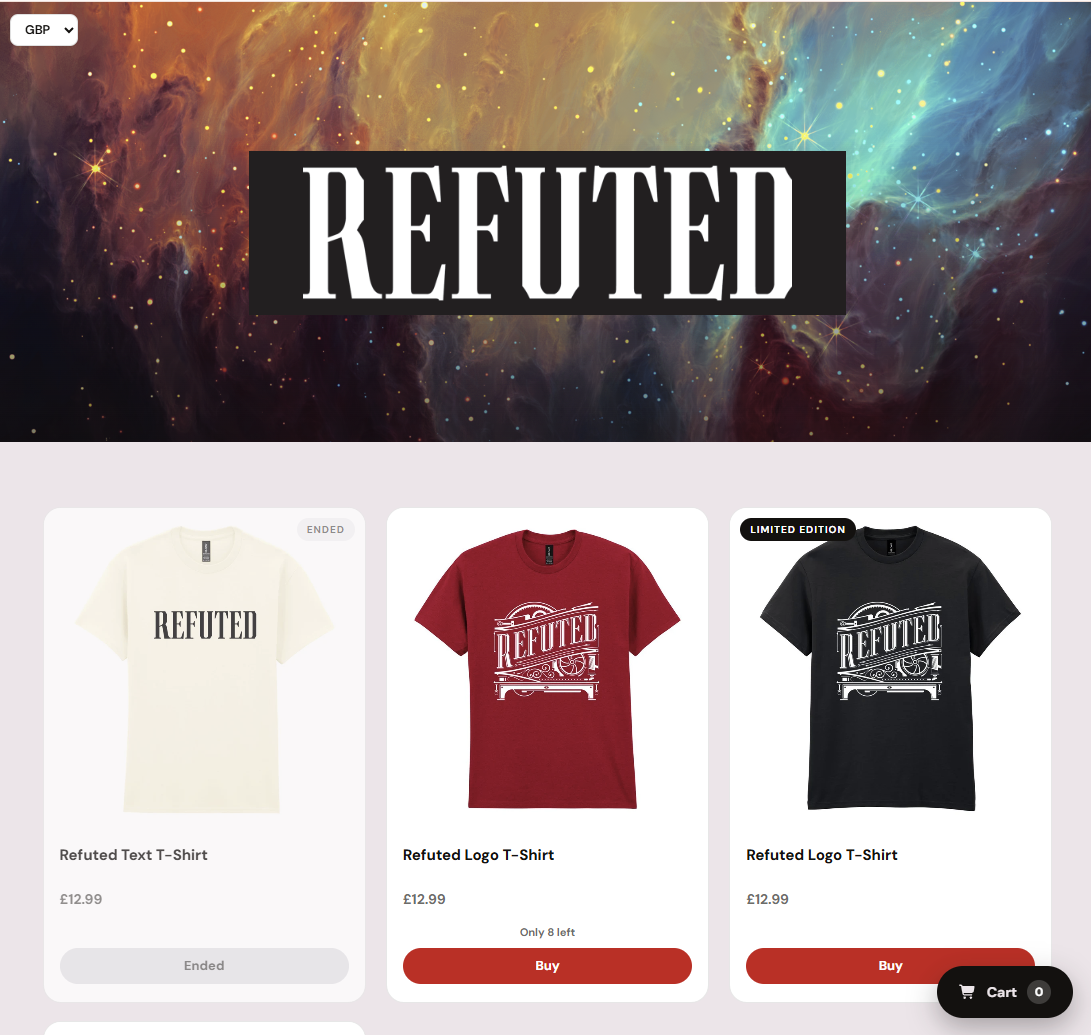
A storefront is your own shop, hosted by us, with no platform to build or maintain. Here is who they are for, why you might want one, and how to set one up.
In this article · 4 sections
Most people who want to sell merch hit the same wall. You have the designs and you have an audience, but between the two sits a shop you now have to build, host, style, secure and keep working. That is a real project, and it is usually the reason the merch never happens.
A storefront is our answer to that. It is a shop of your own, on its own web address, that we host and run. You choose the products, set your prices, add your logo and colours, and share the link. Your buyers order from you. We print, pack and ship every order, and the money for each sale lands with you.
Who they are for
Storefronts suit anyone who has an audience but no shop, and no appetite to build one. In practice that tends to be:
- Creators and communities. You already have followers or members. A storefront turns that into a shop link you can put in a bio or a newsletter.
- Clubs, teams and societies. Kit and leavers merch without one person collecting sizes on a spreadsheet and fronting the cost.
- Venues and local businesses. Breweries, cafes, gyms and studios whose customers keep asking whether they sell the shirt.
- Agencies and studios. Run a separate storefront per client, each branded to that client, without standing up a new site every time.
Why use one instead of a full ecommerce platform
If you already run a Shopify or Etsy shop, you do not need a storefront. Connect it instead and your existing shop keeps doing its job while we handle fulfilment behind it.
A storefront is for when you do not have a shop and do not want the overhead of one. There is no monthly platform fee, no theme to configure, no plugins, no hosting, and nothing to update. There is also no stock, because everything is made to order.
The trade is control. A storefront is deliberately simple, so it will not do everything a full platform can. If you need bundles, subscriptions, complex discounting or a bespoke checkout, a dedicated platform is the better home and we will happily sit behind it.
How to set one up
- Claim your address. Pick a name and your storefront lives at its own web address straight away. Nothing to register or point.
- Build your products. Choose blanks from the catalogue, place your artwork, and pick the colours and sizes you want to offer. You will see a mockup of each one as you go.
- Set your prices. You decide what each product sells for. Your production cost is shown alongside, so your margin is never a mystery.
- Brand it. Add your logo, colours and a short piece of copy so it reads as yours rather than as a generic shop.
- Share the link. That is the whole launch. Orders arrive in your dashboard, we print and ship them, and tracking goes to your buyer automatically.
What your buyers see
Your name, your branding, your prices. Parcels go out plain, with no invoices or inserts from us, so as far as your customer is concerned they bought from you. That is the point of the whole thing.
If you have been meaning to sell merch for a while and kept stalling at the shop-building step, this is the shortest path from a design to something people can actually buy.